

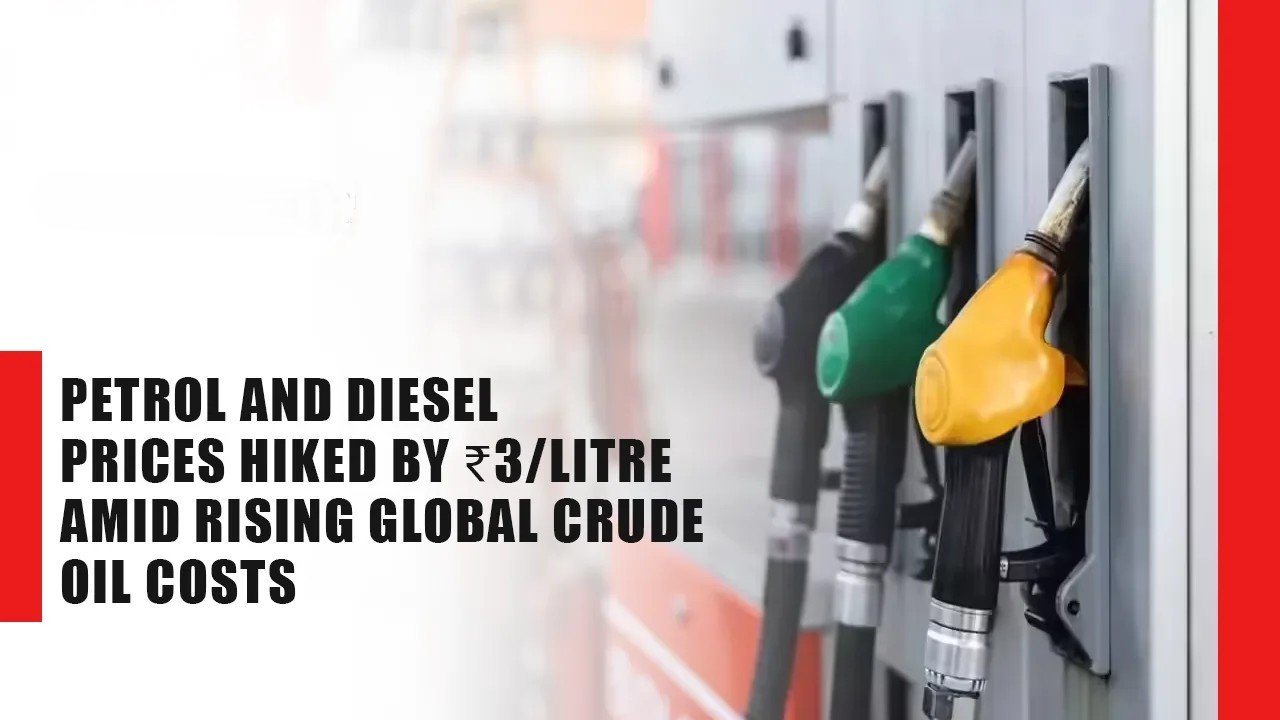
India has officially increased petrol and diesel prices by ₹3 per litre after keeping fuel rates unchanged for several weeks despite rising international crude oil prices. The hike came into effect on May 15, 2026, and marks the first major increase in retail fuel prices in nearly four years. The decision was taken after state-run oil companies started facing heavy financial pressure due to soaring global crude oil prices caused by the ongoing Iran war and tensions near the Strait of Hormuz.
The latest revision has immediately affected consumers across India, especially in metro cities where fuel prices have crossed psychologically important levels once again. Experts believe further hikes may happen if global crude oil prices continue rising in the coming months.
Latest Petrol and Diesel Prices in India
Following the hike, petrol prices in Delhi increased to ₹97.77 per litre, while diesel reached ₹90.67 per litre. In Mumbai, petrol prices crossed ₹106 per litre, and diesel moved close to ₹98 per litre. Similar increases were also recorded in Kolkata, Chennai, Bengaluru, and several other cities.
Oil marketing companies including Indian Oil, BPCL, and HPCL implemented the revised prices nationwide after weeks of absorbing rising crude oil costs.
Why Fuel Prices Increased
The primary reason behind the fuel price hike is the sharp rise in global crude oil prices due to escalating geopolitical tensions in West Asia. The Iran conflict and fears surrounding the Strait of Hormuz have disrupted global oil markets, causing Brent crude prices to surge significantly.
India imports nearly 85% of its crude oil requirements, which means any global oil price increase directly impacts domestic fuel costs. For several weeks, oil companies continued selling fuel at older prices despite paying more for imported crude oil. Eventually, the financial burden became too large to absorb.
According to reports, oil companies were suffering massive under-recoveries because retail fuel prices were not aligned with international crude rates.
PM Modi’s Fuel-Saving Appeal
Before the price hike announcement, Prime Minister Narendra Modi had already urged citizens to reduce unnecessary fuel usage. He appealed to people to use public transport wherever possible and avoid excessive consumption during the ongoing global energy crisis.
The government described the appeal as part of broader economic protection measures aimed at conserving foreign exchange reserves and reducing pressure on India’s import bill.
The timing of the appeal drew attention because it came shortly before the fuel price increase was officially announced.
How the Iran War Triggered the Crisis
The ongoing conflict in West Asia has severely impacted global oil supply chains. The Strait of Hormuz, one of the world’s most critical oil transportation routes, has witnessed major disruptions due to military tensions in the region.
A significant portion of the world’s crude oil passes through this route every day. As fears of supply disruptions increased, crude oil prices surged globally, affecting countries heavily dependent on oil imports, including India.
International agencies have warned that the current crisis could become one of the biggest oil supply disruptions in recent years if tensions continue escalating.
Oil Companies Could No Longer Absorb Losses
State-run oil companies had reportedly been absorbing massive losses for weeks to avoid sudden price shocks for consumers. However, rising international crude prices eventually forced a revision in retail fuel rates.
Indian Oil officials later stated that the ₹3 increase was relatively small compared to the scale of the global crude oil spike. They also assured that refineries across India are operating at full capacity to maintain stable fuel supplies.
Experts believe the government tried delaying the hike for as long as possible before eventually allowing retailers to revise prices.
Impact on Common People
The fuel price hike is expected to increase pressure on household expenses and transportation costs. Petrol and diesel prices directly affect logistics, delivery services, public transportation, and supply chains across India.
Economists warn that higher fuel prices could eventually increase:
- food prices,
- transport fares,
- online delivery charges,
- and overall inflation.
Diesel price increases are especially important because diesel is widely used in trucks, agriculture, and commercial transportation.
Middle-class households and small businesses are expected to feel the strongest impact if fuel prices continue rising.
Could Fuel Prices Rise Again?
Analysts believe this may not be the final fuel price hike if global crude oil prices remain elevated. Several economists predict that fuel prices could continue increasing over the next few months if the Iran conflict intensifies further.
The Reserve Bank of India had also recently warned that prolonged geopolitical instability could affect inflation and fuel pricing in India.
However, experts believe future increases may happen gradually rather than through one major hike at once.
Opposition Criticises Government
Opposition parties strongly criticised the government after the fuel price hike announcement. Congress leaders accused the Centre of increasing financial pressure on ordinary citizens already struggling with inflation and rising living costs.
Several opposition leaders also alleged that the government delayed the hike until after elections to avoid public backlash.
The issue quickly became a major topic of discussion on social media as people reacted to rising fuel costs.
Conclusion
India’s decision to increase petrol and diesel prices by ₹3 per litre reflects the growing pressure created by the global crude oil crisis and the ongoing Iran conflict. With disruptions affecting international oil supply routes, oil companies could no longer continue absorbing rising costs indefinitely.
While the government has attempted to manage the situation through conservation measures and refinery optimization, experts believe fuel prices may remain volatile as long as geopolitical tensions continue impacting global oil markets.