

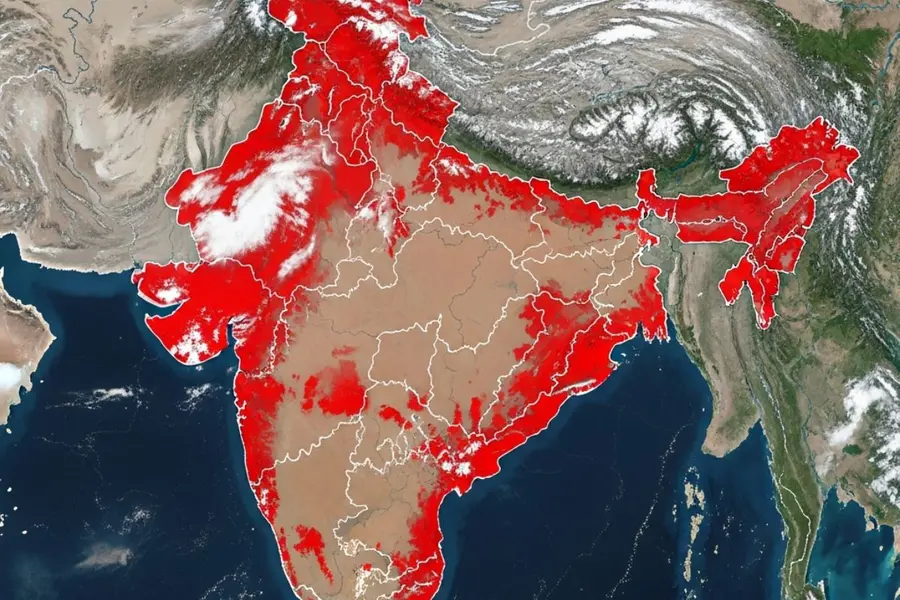
India’s 2026 monsoon season could become one of the most unpredictable weather periods in recent years as scientists warn about the growing impact of a developing El Nino event. Weather experts believe the changing climate pattern may weaken rainfall across several northern and central states while increasing the chances of extreme rain and flooding in southern coastal cities such as Chennai.
The India Meteorological Department (IMD) has already projected below-normal monsoon rainfall this year. According to early forecasts, India may receive only around 92% of its normal seasonal rainfall, raising concerns about agriculture, water supply, and inflation. Experts say the next few months will be extremely important in deciding how severe the monsoon impact could become across different regions of the country.
What Is El Nino and Why Is It Important for India?
El Nino is a global climate phenomenon that happens when ocean temperatures in the Pacific Ocean become warmer than usual. This warming affects weather systems around the world and often weakens India’s southwest monsoon. Since India depends heavily on monsoon rainfall for farming, drinking water, and electricity generation, even a small rainfall deficiency can create major economic and environmental challenges.
Nearly 60% of Indian agriculture still depends directly on rainfall. A weaker monsoon can reduce crop production, increase food prices, and create water shortages in several states. Experts also warn that heatwaves could become more intense if rainfall activity remains weak during June and July.
Scientists are currently monitoring ocean temperatures very closely because early signs suggest that the El Nino event developing in 2026 could become particularly strong.
Several States Could Face Weak Rainfall
According to climate experts, parts of northern, western, and central India are at the highest risk of rainfall deficiency if El Nino conditions continue strengthening. States such as Rajasthan, Haryana, Punjab, Madhya Pradesh, and parts of Maharashtra may experience lower rainfall compared to normal monsoon seasons.
These regions already experience extremely high summer temperatures and rely heavily on monsoon rainfall for farming and water storage. A weak monsoon could increase pressure on groundwater resources and irrigation systems while also affecting crop yields during the kharif season.
Economists are also watching the monsoon forecast carefully because poor rainfall often affects food prices and inflation in India. A weaker agricultural season can create pressure on rural incomes and overall economic growth.
Chennai Could Face Heavy Flood Risk Later This Year
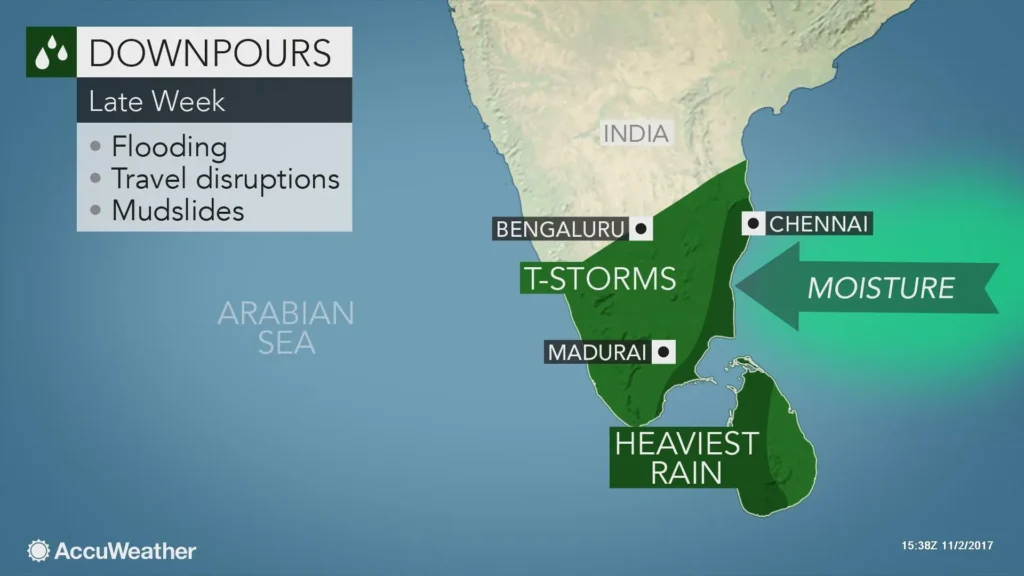
Interestingly, while many parts of India may face weak rainfall, experts are warning that Chennai and coastal Tamil Nadu could experience the opposite problem later in the year. Scientists believe El Nino conditions sometimes strengthen rainfall during the Northeast Monsoon season, which mainly affects Tamil Nadu between October and December.
This has increased concerns about possible urban flooding in Chennai, a city that has already witnessed devastating floods in previous years. Climate researchers say changing rainfall patterns and rising temperatures are making extreme weather events more common across India.
Heavy rainfall within a short period can overwhelm drainage systems and create major flooding situations in densely populated urban areas. Experts believe city authorities may need to strengthen flood preparedness measures before the northeast monsoon season begins.
Scientists Monitoring a Powerful Kelvin Wave
One of the major reasons behind growing El Nino fears is the formation of a strong warm-water “Kelvin wave” inside the Pacific Ocean. Scientists say this warm-water movement is helping ocean temperatures rise rapidly and creating favorable conditions for El Nino development.
Global weather agencies, including NOAA and other international climate centres, are closely monitoring these developments. If ocean temperatures continue increasing over the next few months, the El Nino event could become stronger and influence weather patterns across Asia, including India.
Scientists say climate change is also amplifying weather uncertainty, making monsoon patterns more unpredictable than before.
Early Monsoon Arrival May Offer Some Relief
Despite concerns regarding overall rainfall, there is some positive news for farmers. The southwest monsoon is expected to arrive in Kerala earlier than usual this year. According to Reuters, monsoon rains could reach Kerala around May 26, almost six days before the normal onset date.
An early arrival may help farmers begin sowing activities sooner, especially for crops such as rice, soybean, and sugarcane. However, meteorologists caution that an early onset does not necessarily guarantee a strong or evenly distributed monsoon throughout the season.
Experts say the consistency and distribution of rainfall across June, July, August, and September will remain more important than the arrival date itself.
Climate Change Is Making Weather More Extreme
Scientists believe climate change is one of the biggest reasons behind increasing weather uncertainty in India. Over the last few years, the country has witnessed:
- irregular rainfall,
- sudden cloudbursts,
- stronger cyclones,
- flash floods,
- and prolonged dry spells.
Experts warn that India may increasingly experience both floods and droughts during the same monsoon season due to changing atmospheric and oceanic conditions.
Urban areas remain especially vulnerable because rapid urbanization and poor drainage systems make cities more sensitive to extreme rainfall events.
Government and IMD Monitoring the Situation Closely
The IMD has stated that forecasts may still change in the coming weeks as weather systems continue evolving. Officials are tracking:
- ocean temperatures,
- monsoon wind circulation,
- and atmospheric pressure patterns before issuing updated forecasts.
State governments and disaster management agencies are also preparing for possible extreme weather scenarios during both the southwest and northeast monsoon seasons.
Experts have advised farmers and local authorities to stay alert and follow official weather updates regularly.
Conclusion
India’s 2026 monsoon season is shaping up to be highly uncertain as the threat of a strong El Nino continues growing. While several northern and central states may face weaker rainfall and drought-like conditions, cities such as Chennai could witness heavy rainfall and flood risks later in the year.
With agriculture, water supply, and the economy heavily dependent on monsoon performance, scientists and weather agencies are closely monitoring the situation. The coming weeks will play a crucial role in determining how severe the impact of El Nino could become for India in 2026.