


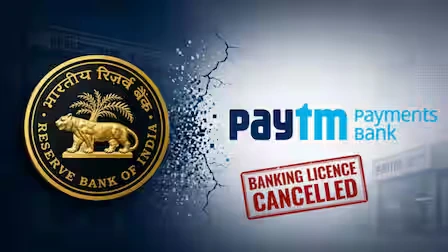
In a major regulatory move, the Reserve Bank of India (RBI) has cancelled the banking licence issued to Paytm Payments Bank Limited (PPBL). The order, issued under Section 22(4) of the Banking Regulation Act, 1949, came into effect at the close of business on April 24, 2026.
This action effectively ends the bank’s journey as a regulated financial entity, marking the culmination of a series of supervisory concerns and compliance issues that have shadowed the bank for the past few years.
Immediate Prohibitions on Banking Business
Following the cancellation, Paytm Payments Bank is now strictly prohibited from:
- Conducting the business of ‘banking’ as defined in Section 5(b) of the Act.
- Engaging in any additional business activities specified under Section 6 of the Banking Regulation Act, 1949.
The prohibition is effective immediately, meaning the entity can no longer accept deposits, process credit transactions, or offer any standard banking services to the public.and peppermint tea.
Why Did the RBI Take This Step?
The central bank’s decision was not sudden but followed prolonged scrutiny. According to the official notification, the RBI cited several critical reasons for the cancellation:
- Interests of Depositors: The bank’s affairs were being conducted in a manner deemed detrimental to the interests of its depositors.
- Management Character: The general character of the bank’s management was found to be prejudicial to public interest.
- Compliance Failures: The bank failed to meet the specific conditions stipulated when it was granted its Payments Bank licence.
Winding Up and the Path Ahead
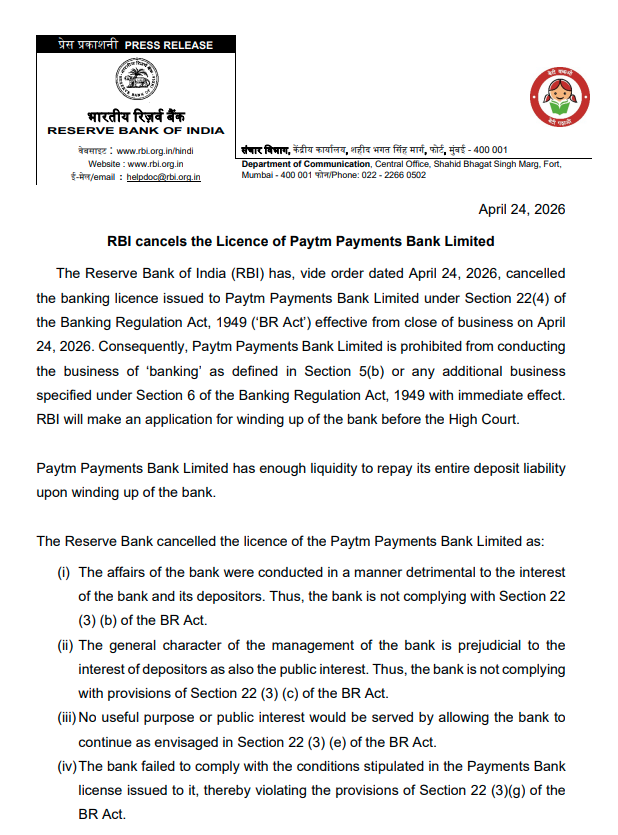
The RBI has announced that it will not stop at just cancelling the licence. The regulator is set to move the High Court to file an application for the formal winding up of the bank.
“Paytm Payments Bank Limited has enough liquidity to repay its entire deposit liability upon winding up of the bank,” the RBI noted, providing some reassurance to existing account holders.
The Timeline of the Crisis
The downfall of PPBL followed a strict regulatory timeline:
- March 2022: RBI directed the bank to stop onboarding new customers due to “material supervisory concerns.”
- January/February 2024: Major restrictions were imposed, barring fresh deposits and top-ups in customer accounts and wallets.
- April 2026: Final cancellation of the banking licence and initiation of liquidation proceedings.
What This Means for the Industry
The exit of one of India’s most prominent payments banks serves as a stark reminder of the RBI’s “zero-tolerance” policy toward persistent non-compliance. While the parent company, One97 Communications, has already shifted much of its focus to third-party bank partnerships for UPI and other services, the formal closure of its banking arm marks the end of an era for the fintech giant’s original ecosystem.
Conclusion
The cancellation of Paytm Payments Bank’s licence is a landmark event in Indian fintech history. It underscores the critical importance of regulatory adherence in the digital banking space. As the winding-up process begins under the supervision of the High Court, the focus will remain on the seamless repayment of depositors and the final settlement of the bank’s liabilities.